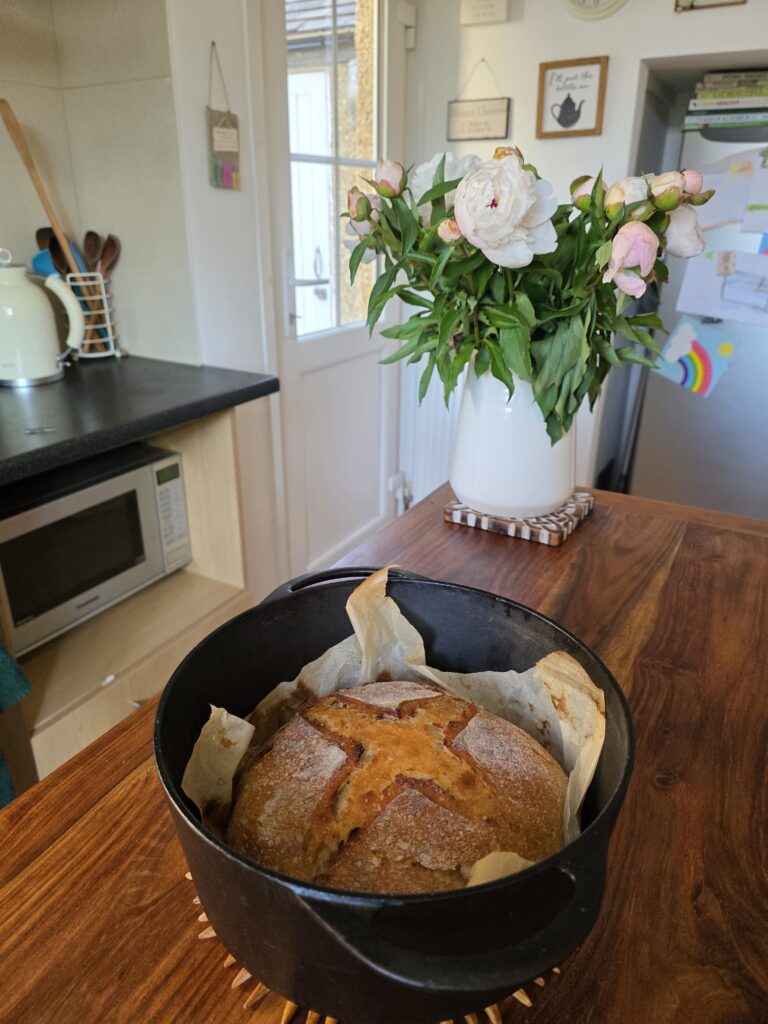
Understanding the Science Behind Sourdough
Sourdough has become more than just a bread; it’s a beautiful blend of science and craft. It all starts with natural fermentation, where wild yeast and lactic acid bacteria come together to create a living ecosystem. This friendly culture leavens your dough, while contributing to its flavor and texture. The longer you allow your sourdough to ferment, the more complex the taste becomes. Isn’t it fascinating how just flour, water, and time can produce such delicious results?
A Simple Sourdough Recipe to Get You Started
Ready to try your hand at sourdough? Here’s a straightforward recipe to get you started. Begin by creating your sourdough starter about five days in advance:
- Combine equal parts of all-purpose flour and water (1 cup each) in a glass jar.
- Stir well, cover loosely, and let it sit at room temperature.
- Feed your mixture daily with equal parts flour and water until it bubbles and increases in size.
Once your starter is ready, you can move on to the actual bread-making process:
- Mix 1 cup of your starter, 1 cup of water, and 3 cups of flour. Blend until a dough forms.
- Let it rest for about 30 minutes, then add 1.5 tsp of salt, mixing well.
- Allow the dough to rise for 4-12 hours until doubled in size.
- Shape the dough and let it proof for another 30 minutes before baking at 450°F (232°C) for 30-35 minutes.
Now you have a loaf of delicious homemade sourdough! The science behind it may seem intricate, but with practice, the art of sourdough baking can become second nature.